Dubai Dog Care: Navigating the August 9-15 Heatwave and Humidity
Navigate Dubai's intense August heat and 99% humidity with our comprehensive week-long dog care guide. Learn safe walking times, cooling tips, and more.
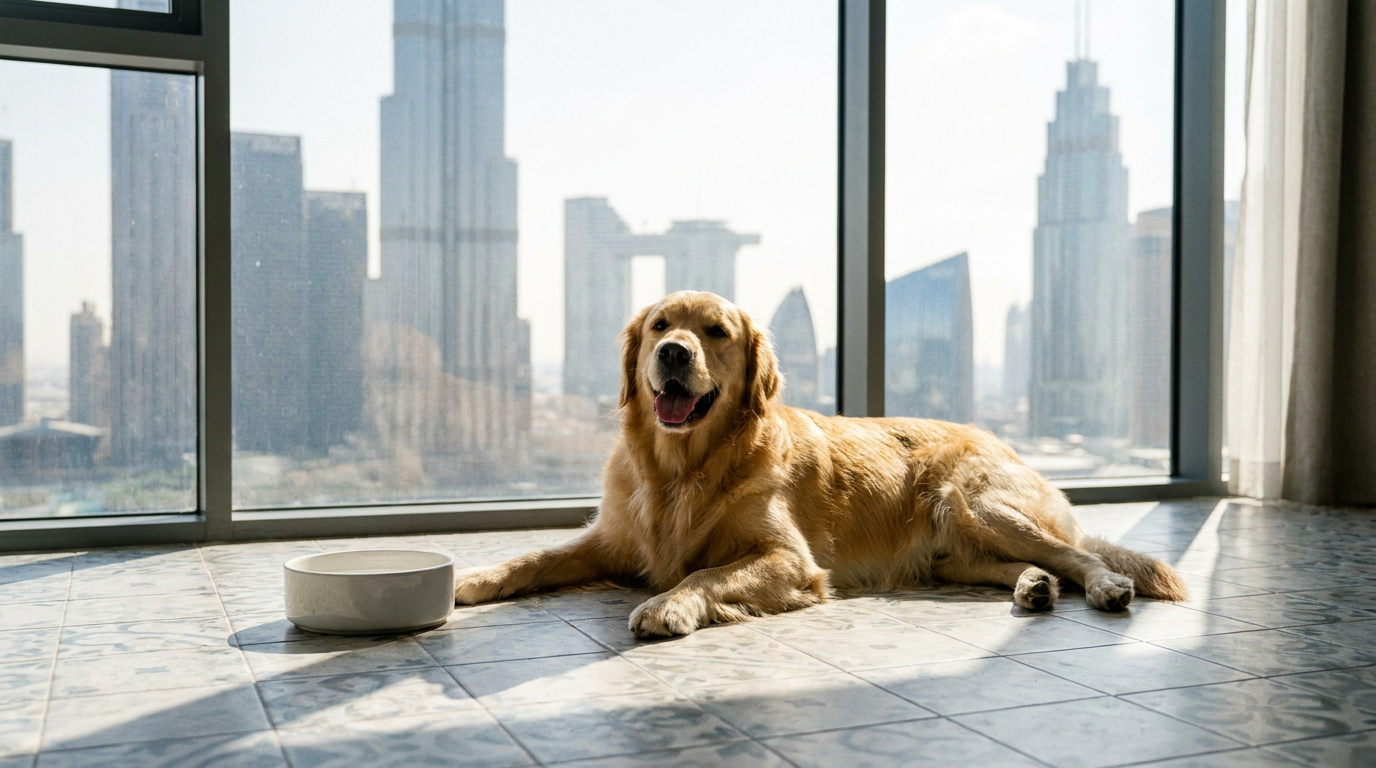
As we step into the thick of August, Dubai is presenting dog owners with a particularly challenging set of weather conditions. The combination of intense heat and rapidly climbing humidity over the next week means our standard pet-care routines need an immediate overhaul. Managing a dog's health in this environment requires more than just carrying a water bottle; it demands a strategic approach to walking times, indoor cooling, and surface temperature management.
The Weather Outlook for August 9 to August 15
This week’s forecast presents a gruelling mix of heat and moisture that will drastically impact how we exercise and care for our dogs. On the 9th of August, we are facing highs of 45°C with a low of 33°C, accompanied by humidity reaching 60%. While temperatures dip slightly to 43°C and 42°C on the 10th and 11th respectively, the humidity will begin to climb, hitting 77% by the 11th.
The middle of the week offers a brief respite in temperature—dropping to 39°C on the 12th—but humidity will spike to 81%. The most dangerous day of the week appears to be the 13th, where highs will surge back to 45°C combined with an oppressive 90% humidity. Heading into the weekend, Friday the 14th and Saturday the 15th will see temperatures of 40°C, but the humidity will reach an extreme 86% and 99%, respectively. Because dogs rely on evaporative cooling through panting, these near-saturation humidity levels make it incredibly difficult for them to lower their body temperature, elevating the risk of heat stress significantly.
How Extreme Heat and Humidity Affect Your Dog
Understanding your dog's physiological response to the UAE summer is the first step in protecting them. Unlike humans, who sweat across their entire body to cool down, dogs cool down mainly through panting and, to a lesser degree, through sweat glands in their paws. When the ambient temperature is higher than the dog's body temperature, panting becomes their primary defence mechanism.
However, as the humidity approaches the 90% to 99% range predicted for later this week, panting becomes highly inefficient. The air is already so saturated with moisture that the dog cannot evaporate water from its respiratory tract effectively. This means that even a short walk in the shade can lead to a dangerous spike in their core temperature. Owners of flat-faced breeds, such as pugs and bulldogs, are at greater risk because their narrower airways make panting less effective. Similarly, senior dogs, young puppies, and overweight pets require extreme caution during this humid stretch.
Paw Pad Protection and the Pavement Test
One of the most underestimated risks of daytime walking in Dubai is the temperature of the ground. Surfaces like asphalt, tiled pavements, and artificial turf absorb heat continuously throughout the daylight hours. These surfaces can easily reach temperatures high enough to burn a dog’s paw pads in under a minute.
To ensure your dog's safety, you should always perform a manual temperature check before allowing them to step onto hard surfaces. A widely recommended standard is the seven-second rule: simply press the back of your hand against the pavement for seven seconds. If it is too hot for your skin to tolerate for that duration, it is far too hot for your dog's paws. Some owners prefer a stricter five-second test during the peak of August, but regardless of the exact count, any discomfort on your hand means the walk must be delayed or relocated to a safe, indoor environment.
Safe Walking Windows and Swapping Activities
Given the forecast, your daily walking schedule must shift exclusively to the early mornings and late evenings. The safest times for outdoor activity in the UAE right now are early morning, before around 8am, and late evening, after sunset. By these times, the ambient temperature has dropped closer to the low 30s, and surfaces have had an opportunity to release their stored heat.
If you are planning an early morning outing, consult the Dubai dog parks directory to find grassy, shaded areas that are safer for paws than concrete pathways. For the weekend, if you wish to take your dog for a swim to help them stay cool, ensure you visit dog-friendly beaches in the UAE only during the earliest hours of Friday to Sunday, avoiding the midday sun entirely.
During the hottest stretch of the day, shorter indoor play sessions are a better substitute for a walk than pushing through the heat. Consider mental enrichment games, indoor fetch, or taking your dog to one of the many pet-friendly restaurants and cafes in Dubai where they can socialise in a heavily air-conditioned environment safely.
Hydration and Indoor Cooling Strategies
Hydration management is critical when temperatures hover above 40°C. Do not assume your dog will drink enough water on their own without encouragement. Water bowls should be checked and refreshed several times a day rather than simply topped up. Dust and food particles can accumulate rapidly, making the water unhygienic and unappealing to your pet. Providing multiple water stations around your home can also encourage more frequent drinking.
While staying indoors is the safest option this week, Dubai's unique climate poses indoor challenges too. The arid desert environment and frequent sandstorms mean that dust builds up quickly in Dubai because of desert sand infiltration, central air conditioning, and low humidity. Central AC systems pull in air and distribute fine sand and particles throughout your home. To maintain good indoor air quality for your dog’s respiratory health—and your own—it is recommended to change AC filters every 4–6 weeks. Additionally, since pet dander adds to household dust, ensuring your dog is brushed frequently by yourself or professionals listed in our dog groomers in Dubai directory will help minimise indoor allergens.
Recognising Heatstroke and Dehydration
Heatstroke is a medical emergency that can escalate incredibly quickly. By the time the symptoms become obvious, a pet’s condition may already be serious. Owners must be vigilant and watch for key indicators such as excessive panting, drooling, lethargy, disorientation, vomiting or a reluctance to move.
If you notice that your dog's gums turn bright red, or it appears confused or unsteady on it’s feet, you must act immediately. Move them to an air-conditioned room, offer them cool (not ice-cold) water, and wet their coat with room-temperature water. Most importantly, contact a professional immediately. Keep the Dubai vets directory bookmarked on your phone so you can quickly locate the nearest emergency clinic.
Dehydration is a slower but equally dangerous threat. Early signs include reduced appetite, low energy, or sunken eyes. If you notice these symptoms persisting for more than a day, it is far safer to schedule a veterinary check-up rather than waiting to see if they improve on their own.
The Fatal Risk of Parked Cars
It is an age-old warning, but it bears repeating every summer in the UAE: never leave a pet in a parked car. This rule applies even if you are just running a quick errand. Car interiors trap heat like an oven, and temperatures can rise to lethal levels in a matter of minutes. This is true even with the windows cracked or the car parked in shade. If your destination is not pet-friendly and your dog cannot accompany you indoors, they must be left in the safety and comfort of your air-conditioned home.
For those planning to travel over the Friday-Sunday weekend or looking for safe daytime care while they are at work, consider using professional dog boarding and pet hotels. These facilities offer temperature-controlled play areas that allow dogs to burn off excess energy safely, without facing the extreme 45°C highs and 99% humidity waiting for them outside.
Frequently Asked Questions
How do I know if the pavement is safe for my dog?
You should use the hand test to check surface temperatures. Press the back of your hand firmly against the asphalt or pavement for seven seconds. If the heat causes you discomfort or pain before the time is up, the ground is too hot for your dog's sensitive paw pads.
What are the safest times to walk my dog this week?
With daytime temperatures peaking at 45°C and humidity reaching 99%, the safest windows are early in the morning before 8 am and late at night after the sun has set. During these times, the ambient temperature is lower and surfaces have had a chance to cool down.
Why does high humidity make the heat more dangerous for dogs?
Dogs do not sweat through their skin like humans do; they primarily cool themselves by evaporating moisture through panting. When humidity levels are exceptionally high, the air is already saturated, making it very difficult for the moisture from their respiratory tract to evaporate, which severely limits their ability to cool down.
What should I do if my dog shows signs of heatstroke?
If your dog exhibits excessive panting, bright red gums, lethargy, or disorientation, move them to a cool, air-conditioned space immediately. Apply cool (not freezing) water to their body, offer them small amounts of water to drink, and contact an emergency vet without delay.
Can I still take my dog to the beach during the summer?
Yes, but you must be incredibly strict about the timing to avoid the extreme heat and burning sand. Plan beach trips for the very early hours of the morning on your Friday-Sunday weekend, and ensure you leave well before the sun reaches its peak intensity. Always bring ample fresh drinking water.