Dubai Summer: Hot Pavement, Paw Care & Grass Smell
Dubai hits 38–42°C by midday. A practical guide to safe walk windows, protecting paws from hot pavement, dog booties and odour-free artificial grass.
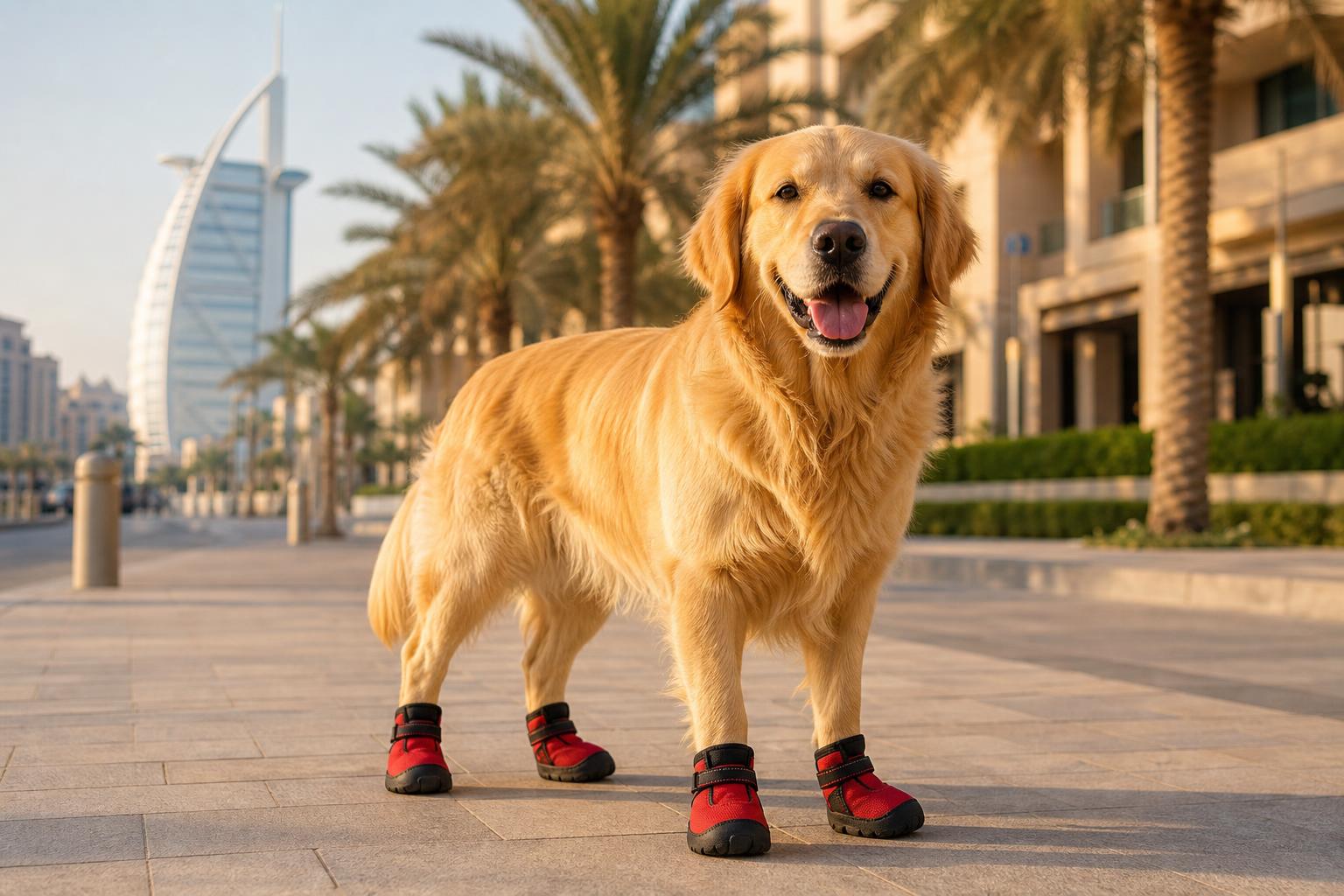
Dubai Summer Heat: Protect Your Dog's Paws & Keep Artificial Grass Smell-Free
It's the 1st of May and Dubai daytime temperatures are already hitting 38–42°C around midday. By June and July it will be worse. At these temperatures, the ground is genuinely dangerous for dogs — pavements, sand, tiles and even artificial grass turn into hot plates that can burn paw pads in seconds.
This is the time of year when most owner-related injuries we hear about happen. Burnt pads, heatstroke, and that unmistakable summer smell creeping out of artificial grass gardens. The good news: all of it is avoidable with a few simple changes to your routine.
How hot is too hot? The 7-second rule
Place the back of your hand flat on the pavement for 7 seconds. If you can't keep it there comfortably, your dog absolutely cannot walk on it.
At 38°C air temperature in Dubai, asphalt and dark tiles can easily reach 60–70°C. Even sand on the beach gets hot enough to blister paw pads within minutes. Artificial grass is no exception — the rubber infill and plastic blades trap heat and routinely measure 65°C+ in direct sun. Many owners assume "it's grass, it's fine" and find their dog limping later that evening.
When to walk your dog in Dubai summer
Stick to these windows:
- Early morning: before 7:00 AM (ideally before 6:00 AM in July/August)
- Late evening: after 8:00 PM, preferably after 9:00 PM once surfaces have cooled
Even at sunset, asphalt holds heat for hours. Test the ground every single time before stepping out — temperatures vary hugely between shaded and exposed areas.
If your dog needs a midday toilet break, keep it short, stick to grass or shaded tile, and carry water. Better still, look at our list of indoor and shaded dog-friendly venues for those impossible afternoon hours.
Wear doggy shoes (booties) — they actually work
Booties are the single best investment you can make for a Dubai summer. They:
- Insulate paws from hot ground
- Protect against cuts from broken glass, hot metal grates, and the abrasive sand around construction sites
- Stop your dog from licking off topical paw balms before they soak in
Most dogs hate them for the first 2–3 wears and then forget they're on. Get the size right (measure across the widest part of the paw, not the length), choose a pair with a real rubber sole — not just fabric — and check the strap isn't rubbing after 10 minutes of walking.
You can also pair booties with a paw wax (musher's wax / paw balm) on cooler-but-still-warm mornings when full booties are overkill. Local pet stores stock both — see our Dubai pet stores guide for nearby options.
Choose cooler walking surfaces
If you can, prioritise routes with:
- Real grass in shaded park areas (try fenced dog parks)
- Light-coloured paving rather than black asphalt
- Shaded promenades — Dubai Marina Walk, JBR boardwalk, City Walk before sunrise
- Sand at the water's edge in early morning (the wet strip stays cool)
Keep your garden grass dog-safe
If you have natural grass:
- Water it lightly before the morning toilet trip — this lowers surface temperature by 10–15°C and rinses any overnight bacteria
- Add shade sails over the area where your dog spends time outside. This single fix can keep grass walkable through the entire day.
- Avoid fertilisers in summer — heat-stressed grass burns easily and chemical residue irritates paw pads
If you have artificial grass:
- Hose it down before use in the morning and again before evening toilet trips — a 30-second rinse can drop surface temperature from 65°C+ to something safe in seconds
- Install shade sails or pergolas over the turf area. Artificial grass with no shade in Dubai summer is essentially un-walkable from 9 AM to 7 PM
- Choose light-coloured infill if you're installing new turf — dark green and black rubber crumb absorb significantly more heat than sand-coloured infill
- Consider a small pea-gravel or paved "toilet corner" under shade for midday breaks, so your dog isn't forced onto baking turf
- Brush the blades upright weekly — matted-down turf traps more heat and holds smells longer (more on smell control below)
The artificial grass smell problem (and how to actually fix it)
This is the hidden side of Dubai dog ownership that nobody warns new owners about. Artificial turf gardens look perfect on day one, but after a few months of dogs urinating in the same spots, the heat bakes the proteins into the rubber infill and the smell becomes overpowering. Once it's set in, ordinary water won't shift it.
Here's a routine that actually works:
Daily
- Pick up faeces immediately — within minutes, not hours. Once it dries onto the blades in 40°C heat, you'll be scrubbing.
- Hose down the lawn every evening after the sun is off it. A light rinse is enough; you're flushing diluted urine through the drainage layer before it bakes.
Weekly
- Spray the high-traffic toilet zones with a diluted enzyme cleaner (the kind used for pet accidents indoors). Enzymes break down the urea proteins that cause the ammonia smell — household disinfectants and bleach don't, they just mask it for a few hours.
Every 2–4 weeks
- Apply a dedicated artificial turf deodoriser. Two formats work well:
- Liquid enzyme treatments that you dilute in a watering can and pour over the affected zone, then leave to soak in.
- Granular zeolite-based infill toppers (sometimes called "pet turf deodorant" or Z-fill / antimicrobial infill). You sprinkle them onto the turf and brush them into the blades — they sit at the base and absorb urine before it can off-gas.
- For badly affected gardens, a deep clean by a turf service once or twice a year (typically before and after summer) replaces the contaminated infill entirely. Worth the cost if the smell has become noticeable from inside the house.
What to avoid
- Bleach — degrades the polyethylene blades and the backing
- Strong perfumed disinfectants — irritate paws and noses
- Letting the lawn fully dry between rinses in peak summer — that's when the smell concentrates
Watch for heatstroke
Dogs cool themselves through panting, not sweating. In Dubai humidity, that mechanism gets overwhelmed fast. Get your dog into shade and onto cool tile immediately if you see:
- Heavy, frantic panting that doesn't slow down
- Bright red gums or tongue
- Drooling thick, ropey saliva
- Wobbling, stumbling, or sudden weakness
- Vomiting or diarrhoea after exercise
Cool with room-temperature water (not ice — it constricts blood vessels and traps heat) on the belly, paws and groin, then call your vet. See our Dubai vets directory for the nearest 24-hour emergency clinic.
Quick summer checklist
- ✅ Walk before 7 AM and after 8 PM only
- ✅ Apply the 7-second hand test every walk
- ✅ Booties for any walk longer than a few minutes
- ✅ Carry collapsible water bowl + bottle
- ✅ Hose the garden daily, enzyme-treat weekly, deodorise the artificial turf every 2–4 weeks
- ✅ Shade sail over the main toilet area
- ✅ Know the signs of heatstroke and your nearest emergency vet
Dubai summer is brutal but completely manageable with the right routine. The owners whose dogs sail through it are the ones who shifted their walks, invested in booties, and treated the garden as ongoing maintenance rather than a one-off install.
Frequently Asked Questions
At what temperature should I stop walking my dog in Dubai?
Stop walking on pavement once air temperature exceeds about 30°C in direct sun, or whenever the 7-second hand test fails. From May to September in Dubai, that means morning and evening walks only — no exceptions on the hottest days.
Are dog booties really necessary or just a gimmick?
In Dubai summer they are genuinely necessary, not optional. Pavement and artificial turf temperatures in May–September routinely exceed the burn threshold for paw pads (roughly 52°C). A few wears in and most dogs ignore them completely.
Why does my artificial grass smell so bad in summer?
Heat bakes urine proteins into the rubber infill at the base of the turf. Plain water can't reach or break down those proteins, which is why daily rinsing alone isn't enough. You need enzyme-based cleaners or zeolite infill products that chemically neutralise the urea. Bleach makes it worse long-term by degrading the turf.
Is artificial grass safe for dogs to walk on in summer?
Only if it's shaded or wetted down. Unshaded synthetic turf in Dubai sun reaches 60–70°C — hot enough to burn pads in seconds. Add a shade sail, hose it down before use, or stick to indoor and shaded areas during the hottest months.
How often should I deodorise artificial grass with a dog?
Daily rinse, weekly enzyme spray on toilet zones, and a full deodoriser treatment (liquid or granular zeolite) every 2–4 weeks. Schedule a deep professional clean once or twice a year — usually April (before peak heat) and October (after peak heat).