Dubai Hit 40°C in May 2026: What It Means for Dogs
Dubai passed 40°C weeks earlier than usual this May. What that means for walk times, hot pavement, paw safety, hydration and heat stroke risk in dogs.
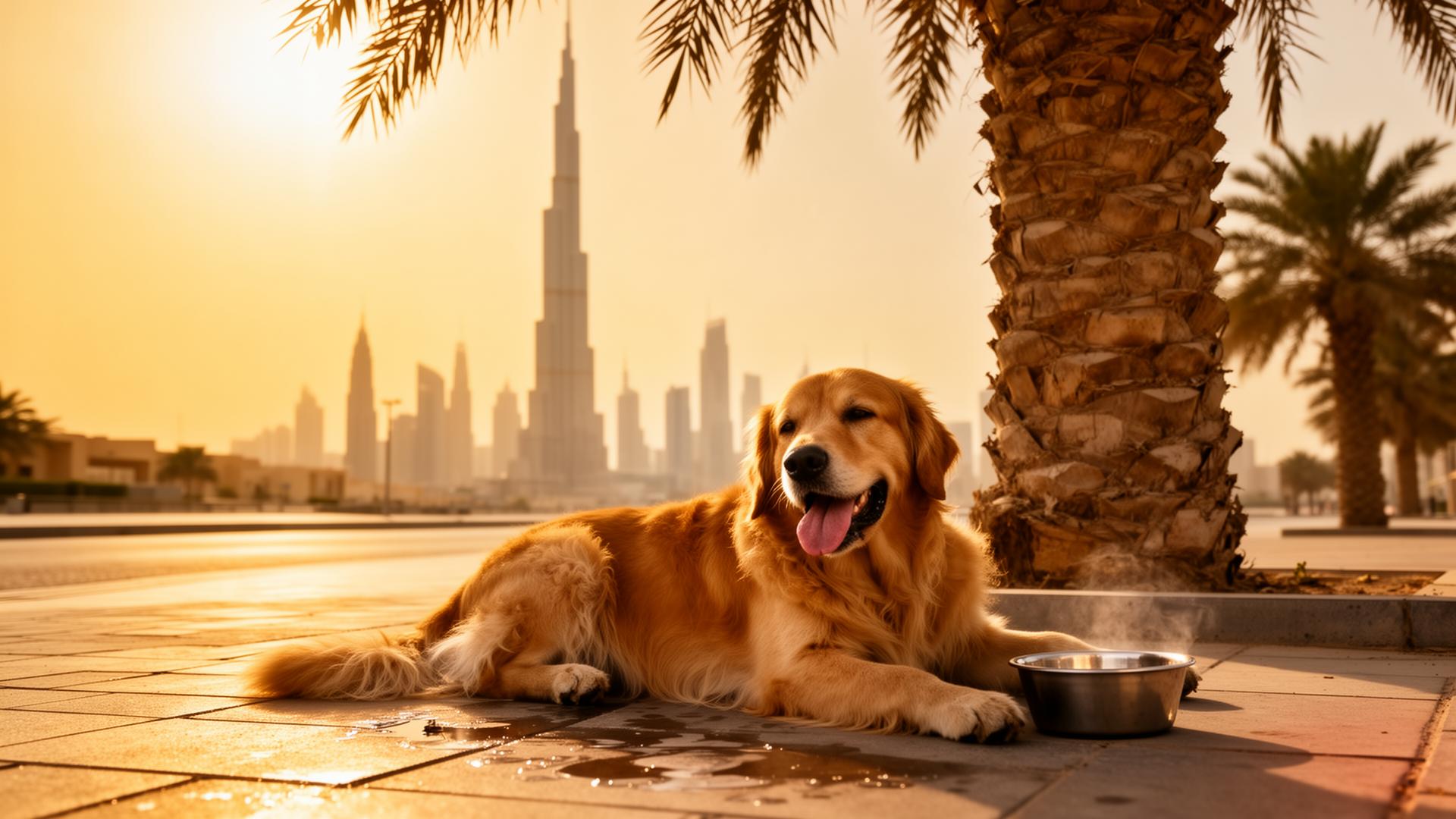
Dubai Already Hit 40°C in May 2026: What It Means for Dog Owners
It's only the third week of May 2026, and Dubai has already pushed past 40°C on several afternoons — with the UAE National Centre of Meteorology recording highs touching 42°C inland and "feels-like" temperatures over 45°C along the coast thanks to humidity off the Gulf. For context, a typical Dubai May averages 36–38°C. We're running roughly 2–4°C hotter than the long-term norm, and we haven't even reached June.
If you own a dog here, this matters. A lot. Heat injury in dogs doesn't arrive gradually — it tips over a threshold and then escalates in minutes. Pavement that's safe at 7am can cause second-degree burns by 9am. A 20-minute walk that was fine in April can put a French Bulldog in an emergency vet by lunchtime in May.
This guide pulls together what we're seeing on the ground at dog parks across Dubai, what local vets and groomers are advising right now, and a practical playbook for the next four months. It's longer than our usual posts because the stakes are higher — bookmark it and come back to specific sections as the summer progresses.
Why this May is different
The UAE has been trending warmer year-on-year for over a decade, but 2026 has compounded that with two specific factors:
- An early ridge of high pressure sitting over the Arabian Peninsula has suppressed the usual late-spring sea breeze, which normally takes the edge off coastal afternoons until early June.
- Higher-than-average humidity along the coast (we've seen 60–75% on several mornings) is dramatically increasing the heat index — the temperature your dog actually experiences.
Dogs don't sweat through their skin the way humans do. They cool themselves almost entirely by panting, which is essentially evaporative cooling from the tongue and respiratory tract. When ambient humidity climbs, that evaporative process becomes far less efficient. A 40°C day at 30% humidity is uncomfortable. A 38°C day at 70% humidity is dangerous — even for a healthy adult dog in good condition.
So when you hear the forecast on the radio, don't just listen for the number. Listen for the humidity. Both matter.
What 40°C does to a dog physiologically
A dog's normal body temperature is 38.3–39.2°C. Heatstroke is generally diagnosed when core temperature crosses 41°C. That's a gap of roughly 2°C — and in Dubai's May afternoon sun, a medium-sized dog can close that gap in under 15 minutes of moderate activity on hot pavement.
Here's the rough escalation timeline our local vet partners describe:
- Minutes 0–5: Heavy panting, slowing pace, seeking shade, drinking eagerly when offered water.
- Minutes 5–15: Bright red gums and tongue, excessive drool that becomes thick and ropey, glazed eyes, owner has to coax the dog forward.
- Minutes 15–30: Wobbling gait, vomiting or diarrhoea, collapse. This is an emergency.
- 30+ minutes untreated: Organ damage — kidneys, liver, brain — that can be fatal even with treatment.
The single most important sentence in this article is this: if your dog is staggering, vomiting, or has collapsed after time in the heat, drive to the nearest emergency vet immediately. Do not wait to "see if they recover".
The pavement test (and why your hand isn't enough)
Asphalt and concrete in Dubai routinely reach 60–70°C surface temperature when air temperature is 40°C. Painted road markings and metal manhole covers can go higher.
The classic advice is the seven-second rule: place the back of your hand flat on the pavement. If you can't hold it there comfortably for seven seconds, it's too hot for your dog's paws. This is a decent screening test in April. By mid-May it's already insufficient — by the time it feels painful to your hand (which is much tougher than a dog's paw pad), you're well past the burn threshold.
A more reliable rule for the next four months: if it's after 7am or before 6pm in May–September, assume the pavement is unsafe. Walk on grass, sand (early morning only — beach sand also gets dangerously hot), or shaded interlocking villa-community paths only.
Our deeper guide on this — Dubai summer hot pavement, paw care, artificial grass smell — covers paw-pad first aid and product recommendations in detail. If you've never read it, this week is the week.
Rethinking your walk schedule for May–September
The single biggest change owners need to make right now is time of day. From now until late October, your dog gets two walks — and both of them should be in the dark or near-dark.
Morning walk:
- Before 6:00am is ideal. The pavement has had all night to cool, and air temperature is at its daily minimum (often 28–30°C in May).
- By 6:30–7:00am, direct sunlight starts heating dark surfaces fast. Aim to be home by 7am, not just out the door.
- This is the longer of the two walks — a real walk, with sniffing, exploration, and exercise. 30–45 minutes is reasonable for most dogs in May; trim it as June and July arrive.
Evening walk:
- After 8:30pm in May, after 9:30pm by July.
- The pavement holds heat for hours after sunset. A sidewalk that looked safe at 7:30pm because the sun was down may still be 45°C from radiated heat.
- Keep this one shorter — 15–25 minutes for a toilet break and gentle leg-stretch.
Midday: don't. Not even a short potty break on hot concrete. Use a pee pad indoors or a strip of artificial grass on a shaded balcony. Most apartment buildings in Dubai Marina, JBR, Downtown, and Business Bay now have indoor pet-relief areas — use them.
Where to actually walk right now
Concrete and asphalt are the enemy. Grass, sand, and shaded paths are your friend. A few realistic options for the next four months:
- Villa-community grass parks — communities like Arabian Ranches, Mudon, Springs, Meadows, and The Sustainable City all have well-irrigated grass areas that stay 10–15°C cooler than open pavement. If you don't live there, find a friend who does.
- Fenced dog parks — most are on grass or shaded mulch. The early-morning hour at Al Barsha Pond Park, Dubai Hills Park, and Mushrif Park is the closest you'll get to a "normal" walk.
- Beach — only in the very last hour before sunrise and the very first hour of dawn. Sand gets brutally hot fast. See our dog-friendly beaches guide for the few stretches that are legally open to dogs.
- Air-conditioned shopping options — a handful of pet-friendly cafés and stores allow leashed dogs inside, which works as a mid-day enrichment outing without heat exposure.
If you've recently moved here from Europe, the UK, North America, or Australia, this is the part that takes the most adjustment. Our advice for new dog owners moving to Dubai walks through the cultural and practical shifts in detail.
Swimming: the single best summer activity
If you take one piece of advice from this guide, take this: start incorporating swimming into your dog's weekly routine now. A 20-minute swim burns more calories than an hour-long walk, eliminates pavement risk entirely, and naturally drops your dog's core temperature.
We covered the full landscape — dedicated dog pools, hydrotherapy centres, and pet-friendly hotel pools — in our recent post on dog swimming pools in Dubai. The short version: there are now over a dozen options across the city, sessions are typically AED 100–250 for a half-hour, and most facilities can have you booked in within the same week.
For dogs that have never swum, ease in with a floatation vest and a calm handler. Most dogs love it within two or three sessions. The exceptions — typically heavy-chested breeds like English Bulldogs and some senior dogs — should stick to shallow paddling or hydrotherapy treadmills under supervision.
Brachycephalic breeds: the highest-risk group
If you own a French Bulldog, English Bulldog, Pug, Boxer, Cavalier King Charles Spaniel, Boston Terrier, or Shih Tzu, the next four months require a fundamentally different approach. These breeds have shortened airways that make panting — their primary cooling mechanism — significantly less effective.
Local emergency vets see a sharp spike in brachycephalic heatstroke cases every year from mid-May onwards. The pattern is depressingly consistent: a "quick" 10-minute walk in 38°C heat that the owner thought would be fine, followed by laboured breathing in the car on the way home, followed by a 4-day hospital stay if the dog is lucky.
If your dog is brachycephalic, here's the honest summer protocol:
- Pre-dawn walks only — out by 5:30am, home by 6am.
- No evening walks if temperatures haven't dropped below 35°C — that's most evenings from June through August.
- Hard "no" on the beach in summer — sand traps heat, and there's no shade.
- Air-conditioned exercise — indoor fetch, scent work, food puzzles, training sessions. Mental tiredness counts.
- Swimming with a vest — even confident bulldog swimmers tire quickly.
- Keep them lean — extra weight makes heat regulation dramatically worse. Talk to your vet about a slight diet adjustment for the summer.
Hydration: more than just leaving a bowl out
Most owners overestimate how much their dog is drinking and underestimate how much they're losing. A 20kg dog can lose half a litre of water per hour through panting on a hot day. That's a meaningful percentage of body water in a single afternoon.
Practical hydration upgrades for the next four months:
- Multiple water stations. Don't make your dog walk to the kitchen. Put bowls in the living room, bedroom, balcony shade, and near the front door.
- Refresh water twice a day minimum. Dubai tap water sitting in a steel bowl all day gets warm and uninviting. Cold water is drunk more readily.
- Add ice cubes to the main bowl in the afternoon — most dogs love crunching them and it slows the warming of the water.
- Carry a collapsible water bottle on every walk, even the short ones. Offer water every 5–10 minutes.
- Wet food or kibble topped with water through summer to add baseline hydration.
- Frozen treats — plain yoghurt or low-sodium chicken broth frozen in silicone moulds, given on the balcony or in the kitchen as enrichment.
If your dog suddenly stops drinking, or starts drinking dramatically more than usual, talk to your vet. Both extremes can be early warning signs.
Cars: the absolute non-negotiable
The interior of a parked car in Dubai in May can hit 65°C in under ten minutes, even with windows cracked, even in shade. There is no safe duration. Not five minutes. Not "I'm just running into the shop". Not ever, between May and October.
If your dog is in the car with you on errands, they stay with you and the engine stays on. If that's not possible, the dog stays home. This isn't a guideline — it's how you avoid a fatal mistake.
Grooming for the summer ahead
There's a persistent myth that you should shave double-coated breeds (Huskies, Goldens, Pomeranians, German Shepherds) for the summer. Don't. Their double coat actually insulates against heat and protects against sunburn. Shaving disrupts this and can permanently damage the coat's regrowth.
What you should do this week:
- Book a de-shed with a reputable groomer to remove the dead undercoat. This is the single biggest cooling improvement you can make for a double-coated dog.
- Keep nails short — long nails change paw posture, which on hot pavement means more skin contact.
- Trim paw-pad fur so it doesn't trap heat and grit between the pads.
- Sanitary trim for long-haired breeds — keeps things cleaner during heavier panting and drooling months.
- Sunscreen on pink-skinned dogs (white Bull Terriers, hairless breeds, the bellies of light-coloured dogs). Pet-safe zinc-free formulas only.
Our Dubai dog grooming and fashion guide lists groomers who specialise in summer-prep cuts and which neighbourhoods have mobile groomers who'll come to your villa.
Daycare, boarding, and indoor enrichment
Dubai summer is when good daycare and kennel options earn their fees. Two or three half-days a week of air-conditioned play with other dogs gives your dog the physical and social exercise they can't get on walks. It's also a sanity-saver for owners working from home with a bored, under-exercised dog.
If you're choosing a daycare for the first time, read our kennel and boarding checklist. The same vetting questions apply to daycare — air conditioning reliability (do they have backup generators?), staff-to-dog ratio, vaccination requirements, and how they handle the inevitable scuffle between two over-tired pugs.
At home, the goal in summer is to substitute mental exercise for physical exercise. Some things that genuinely work:
- Snuffle mats and scent work — sprinkle kibble into a snuffle mat and let your dog "hunt" their dinner. 10 minutes of this equals roughly 30 minutes of walk-tiredness.
- Frozen Kongs — wet food, peanut butter, or pumpkin frozen inside a Kong takes most dogs 20–40 minutes to finish.
- Trick training sessions — five 5-minute sessions a day teaches genuinely useful new behaviours and tires dogs out remarkably well.
- Indoor obstacle courses with sofa cushions, low jumps, and tunnels for small-to-medium dogs.
- A second dog playdate at someone's air-conditioned villa or apartment.
Travel and staycations: choose dog-friendly
Plenty of dog-friendly hotels across the UAE allow guests to bring their dog, and some have proper pool access for pets. Our review of the Marriott Resort Palm Jumeirah's pet-friendly programme covers what an actual stay with a dog in Dubai looks like — what works, what doesn't, and what to ask before booking.
If you're travelling out of the country this summer and your dog isn't coming, book boarding now. Good kennels fill up by early June. The full kennel directory lists current options across Dubai and the Northern Emirates.
A word on stray and community dogs in summer
If you see a stray or community dog in obvious heat distress — collapsed, unresponsive, not seeking shade — please don't walk past. Call K9 Friends Dubai or the Stray Dogs Center UAQ (numbers on our animal shelter guide). If the dog can be safely moved, get them into shade and offer water, but don't pour ice water over a heatstroke case — gradual cooling with lukewarm water is safer.
Leaving a shallow bowl of fresh water outside your villa gate or apartment block costs nothing and can save a life on a 42°C afternoon. Refill it daily.
Quick-reference summer checklist
Print this, screenshot it, send it to anyone walking your dog for you:
- ✅ All walks before 6:00am or after 8:30pm
- ✅ Pavement test with the back of your hand — or just default to grass
- ✅ Collapsible water bottle on every walk
- ✅ Watch for: heavy drooling, bright red gums, wobbling, vomiting
- ✅ Car = with you, engine on, or dog stays home
- ✅ De-shed booked with a groomer
- ✅ Daycare or swimming session at least once a week
- ✅ Multiple water stations refreshed twice daily
- ✅ Brachycephalic dogs: pre-dawn walks only, no beach
- ❌ No shaving double coats
- ❌ No midday potty breaks on hot concrete
- ❌ No "quick" stops with the dog in the car
Frequently asked questions
Is 40°C too hot to walk a dog in Dubai?
At 40°C ambient air temperature, pavement surface is typically 60–70°C — well above the burn threshold for paw pads. Walks at that air temperature are not safe regardless of duration. Wait until early morning (before 6am) or late evening (after 8:30pm) when both air and surface temperatures have dropped.
What's the latest in the morning I can safely walk my dog in May in Dubai?
By mid-May 2026, aim to be home by 7:00am. Direct sun begins heating pavement quickly from around 6:30am, and the air temperature climbs past 32°C by 8am most days. By June and July, push the cut-off back to 6:00am.
How do I know if my dog has heatstroke?
Key signs: excessive panting that doesn't slow down, bright red or pale gums, thick ropey drool, vomiting, diarrhoea, wobbling, glazed eyes, or collapse. If your dog has more than one of these symptoms after time in the heat, treat it as an emergency and drive to the nearest vet. For the clinical detail — temperature thresholds, first-aid cooling steps and when to stop cooling — see this Dubai vet's guide to heat stroke in dogs and cats.
Can I take my dog to the beach in the summer in Dubai?
Only in the last hour before sunrise and the first hour after, on the few legally dog-friendly beaches. Sand traps heat aggressively and there's no shade. Brachycephalic breeds shouldn't go to the beach at all between May and September.
Should I shave my dog for Dubai summer?
Not if they have a double coat. Double coats insulate against heat as well as cold, and shaving permanently damages regrowth. Do book a thorough de-shed with a professional groomer — that's the safe and effective alternative.
How much water does my dog need on a 40°C day?
Roughly double their cool-season intake. A 20kg dog that normally drinks around 1 litre per day will need closer to 1.5–2 litres in May–September. Offer water on every walk and provide multiple bowls around the home.
Are dog booties a good solution for Dubai summer pavement?
They help, but they're not a free pass to walk in the heat. Booties protect paws from surface burns but don't address the heat your dog absorbs through their body, their breathing, or their belly. Use booties for short essential outings only, not to "unlock" daytime walks.
What temperature is too hot for a French Bulldog or Pug in Dubai?
Brachycephalic breeds should not exercise outdoors above 28°C ambient temperature, with very short outings only between 28–32°C. In Dubai from May through September, that means pre-dawn walks only and indoor enrichment for the rest of the day.
The bottom line
An early 40°C in May is a useful warning shot. It's telling us — clearly — that the next four months will be harder than usual on dogs in Dubai. The owners who adapt their schedules now, book a de-shed this week, and lock in a weekly swim session will sail through summer with happy, well-exercised dogs. The ones who keep trying to do "normal" walks at 8am because they always have will be on a first-name basis with the emergency vet by July.
You don't need to do everything in this guide. But pick three things, start them this week, and your dog will thank you.
Stay cool. Walk early. And if in doubt — swim.
Further reading
- Heat Stroke in Dogs and Cats: A Dubai Vet's Complete Guide — TopVet Clinic, Al Jaddaf. Stage-by-stage symptoms, normal vs. emergency body temperatures, and the correct at-home cooling protocol before you reach the clinic.
- Dog-friendly beaches in Dubai — where you can legally cool off, and the safe hours to go.
- Find a vet near you — clinics across Dubai and the wider UAE, including emergency options.
_Browse our directories for vets, groomers, dog-friendly hotels, kennels and daycares, and dog parks across the UAE — all updated for summer 2026._